03 · Decision support · two fantasy football leagues
Trade Finder: five ranking sources, one answer on a phone
Ranking sites disagree about what every player is worth. This tool reads the real league rosters, joins five sources to one player identity, and shows where a trade helps both teams.
- ranking sources joined
- 5
- leagues
- 2
- days before data is marked stale
- 7
What it looks like
3 screens. Swipe sideways, or tap one to see it full size.
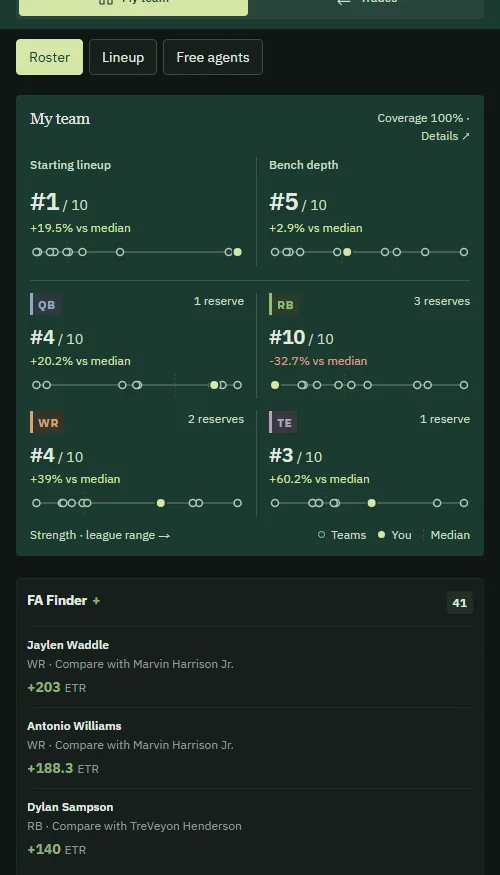
Where the team ranks at each position. 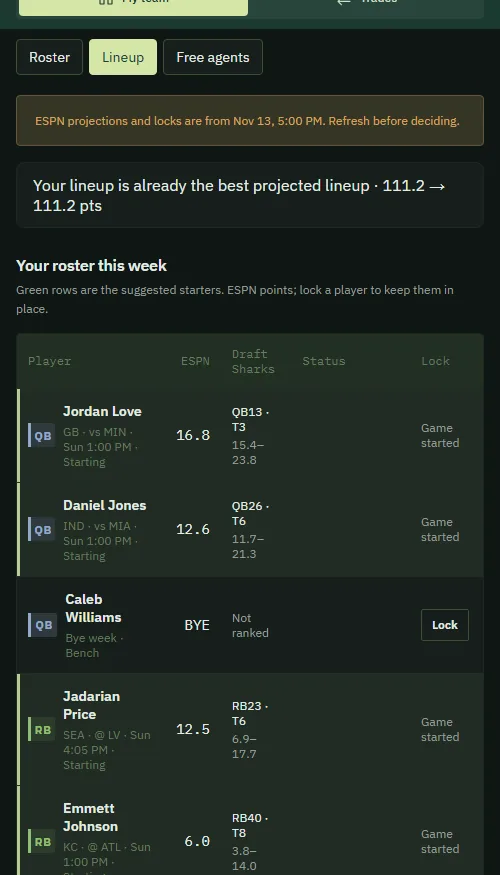
This week's best lineup. 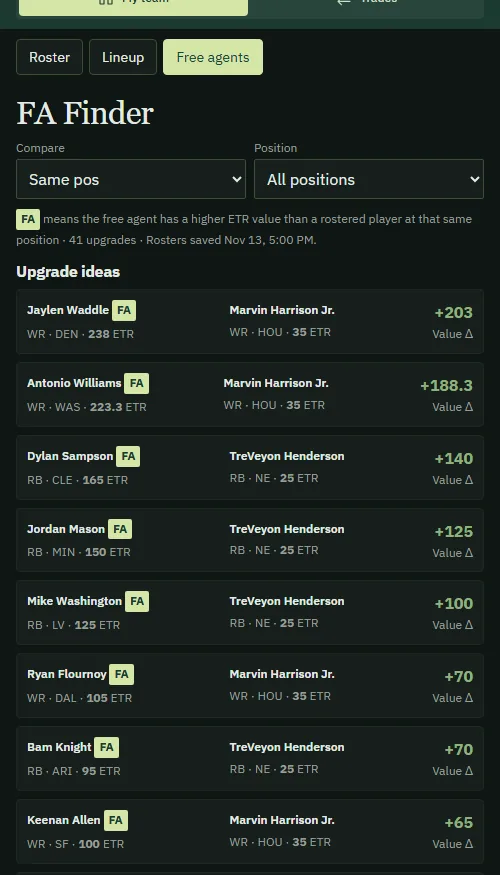
Free agents worth more than someone on the roster.
How it works
- It pulls the current rosters for both leagues.
- It pulls each ranking source on that source's own schedule.
- It matches every player to a single identity across all five.
- It warns when data is more than seven days old and stops using it to confirm a trade.
- It scores possible trades for both sides and rebuilds the site.
Coding agents built the scrapers, the scoring and the site from written plans.
The value
It replaces five browser tabs and a guess with one screen. The harder problem it solves is a common one in business: several sources that disagree, with no shared key between them and no way to tell which is current.
What I learned
- Data integration. Most of the work was matching the same player across sources that spell and group things differently.
- Data quality rules. Every source shows its date. The tool prints any player it can't match instead of dropping them, so gaps are visible.
- Cost control. Paid scraping runs on a weekly credit budget with a cache, so a repeat run costs nothing.
- Design for the decision. The person using it is on a phone and wants an answer. The screens lead with the recommendation and keep the evidence one tap away.