02 · Product · in daily use at home
Livi Home: a family product that costs $0 a month to run
A tablet in our kitchen shows the calendar, lists, notes, weather alerts, sports and photos, and everyone in the house has a phone view. I own the product. AI agents write the code.
- automated tests passing
- 683
- monthly running cost
- $0
- outside dependency
- 1
The live site is private because it holds my family's calendar. Every screen below shows a made-up family.
What it looks like
9 screens. Swipe sideways, or tap one to see it full size.
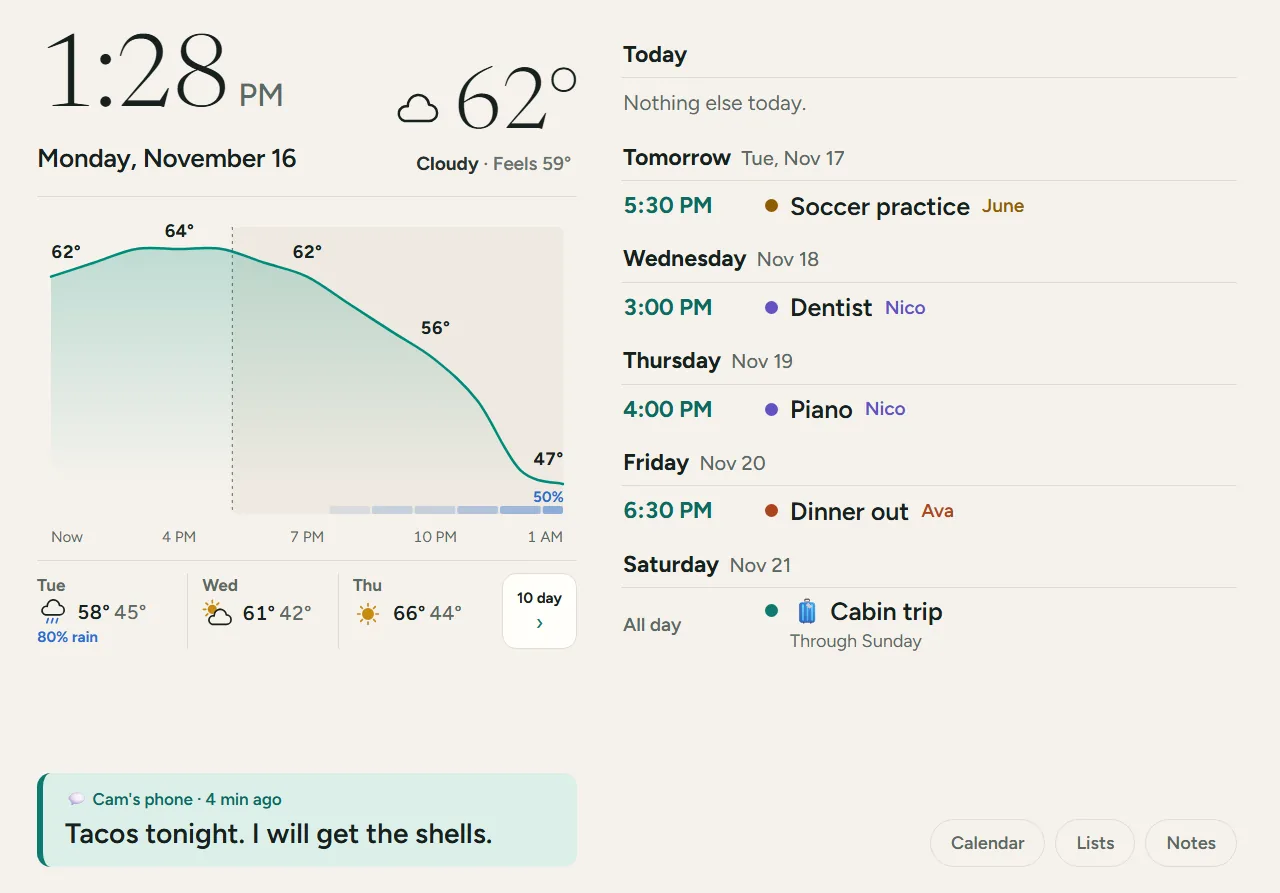
The resting screen, readable from across the kitchen. 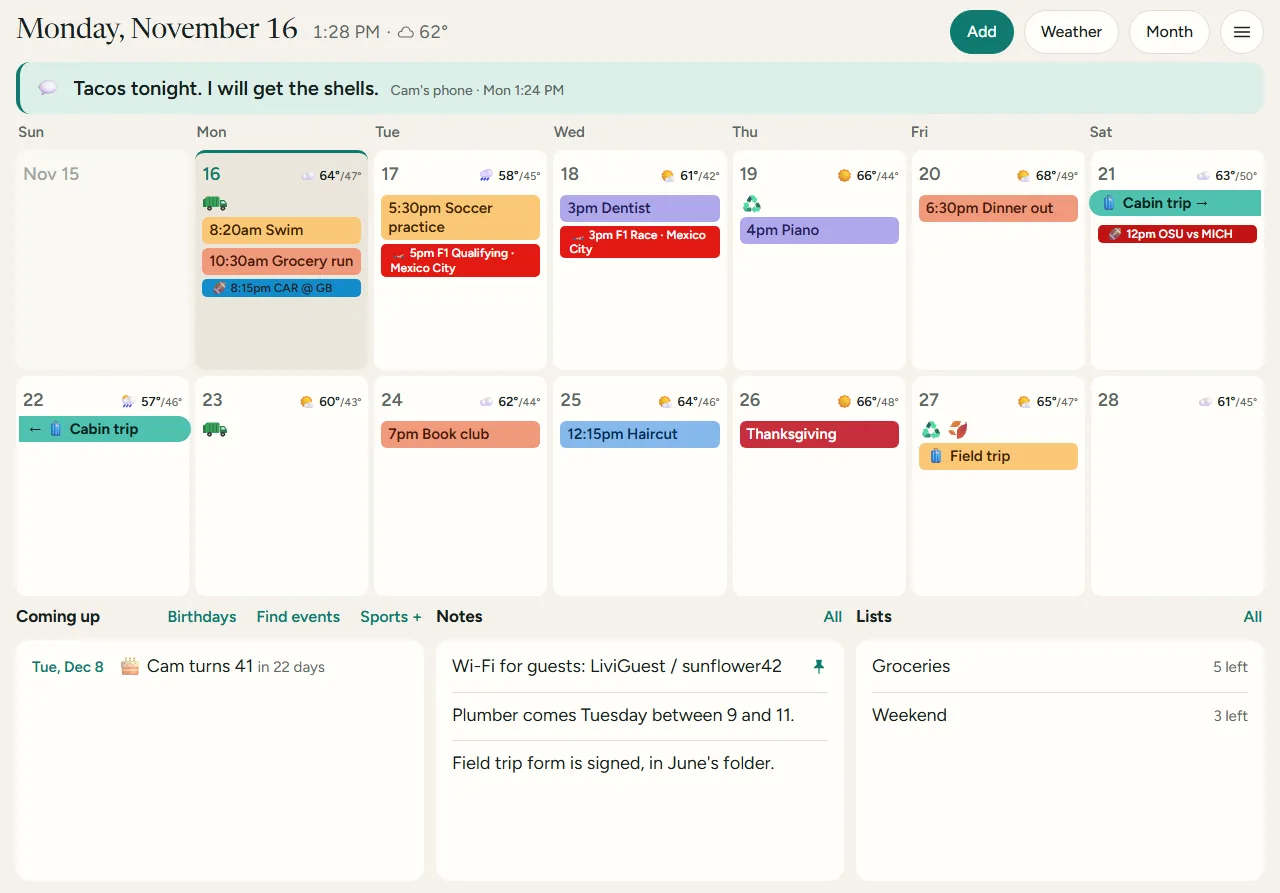
One tap opens the dashboard. 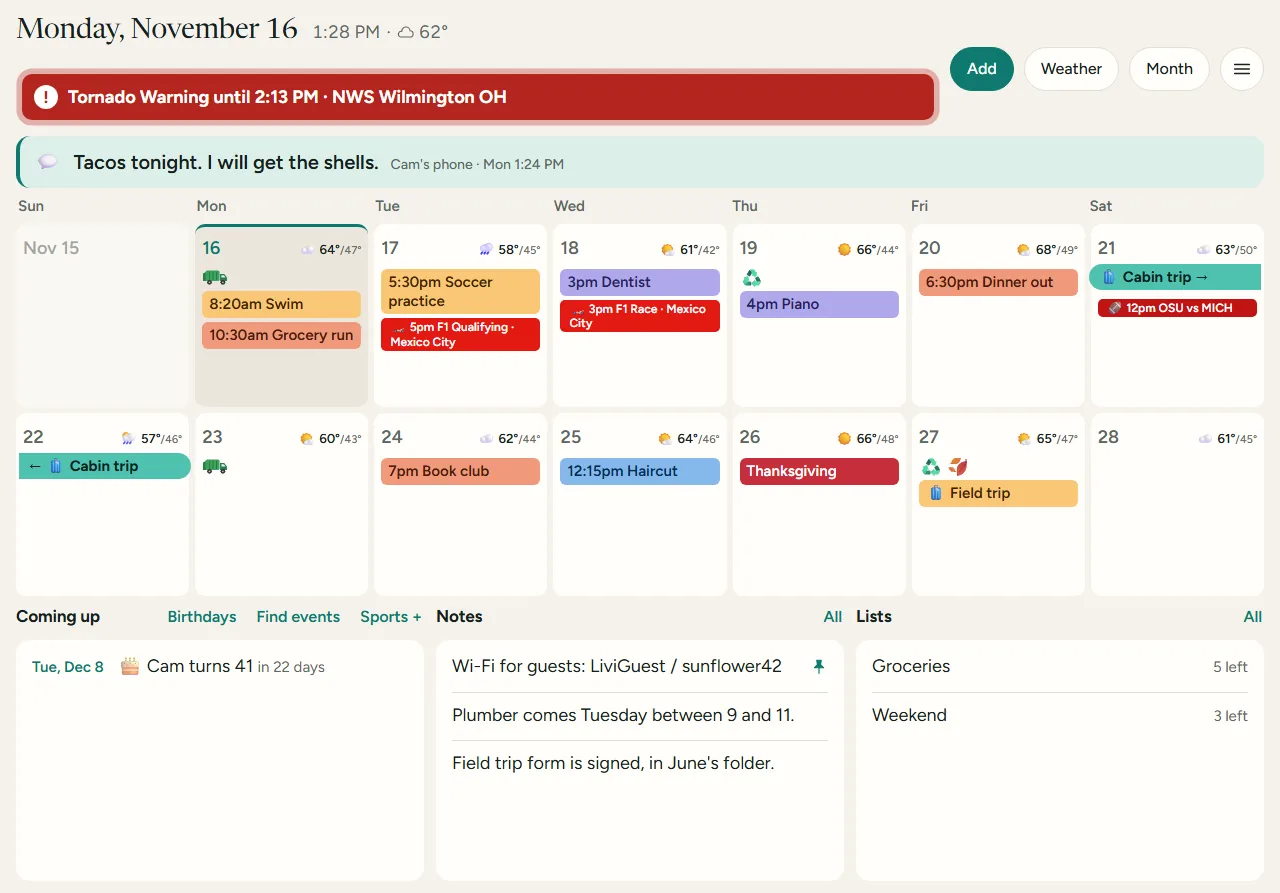
A National Weather Service warning takes over the top of the screen. 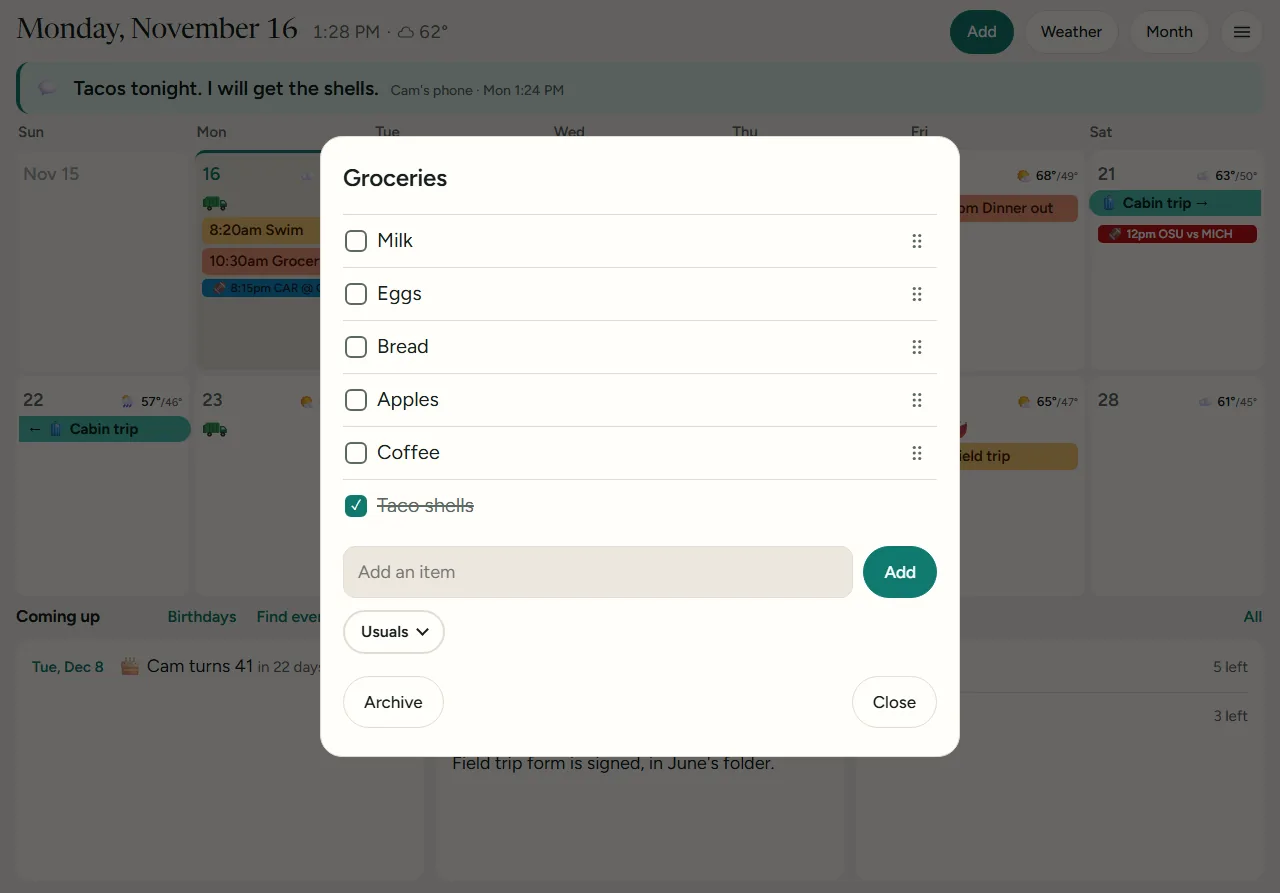
A shared grocery list. 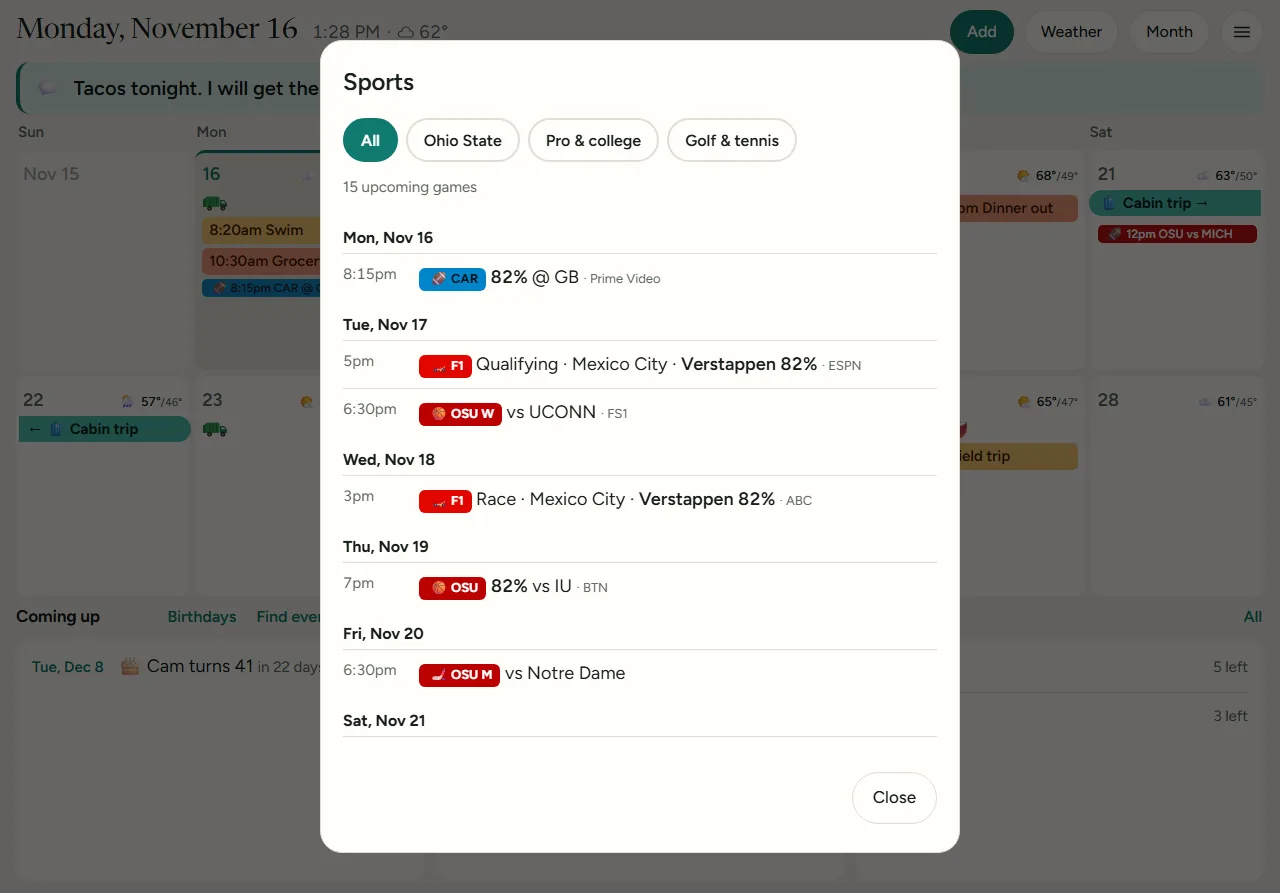
The teams we follow, with market win odds. 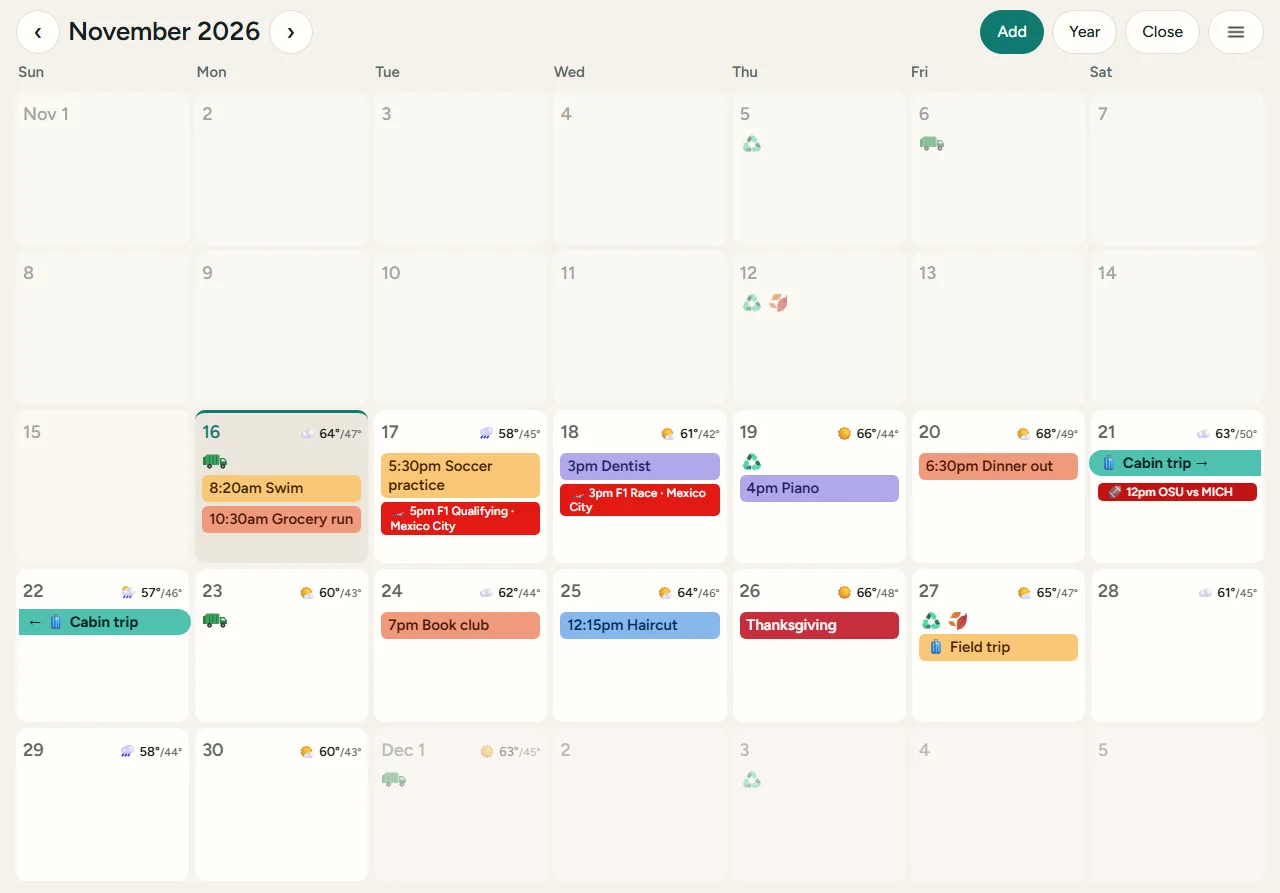
The month view. 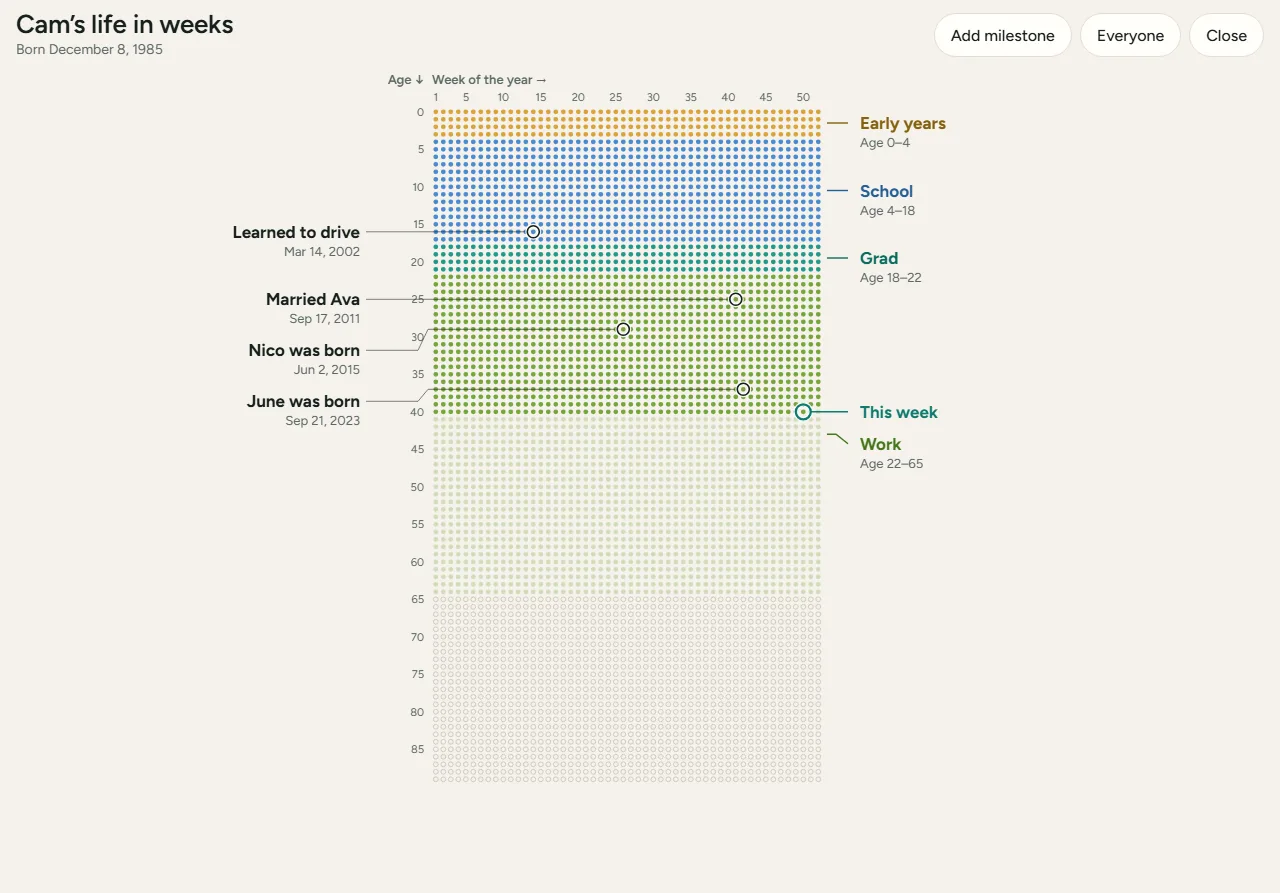
A life in weeks, one dot per week, opened from a birthday. 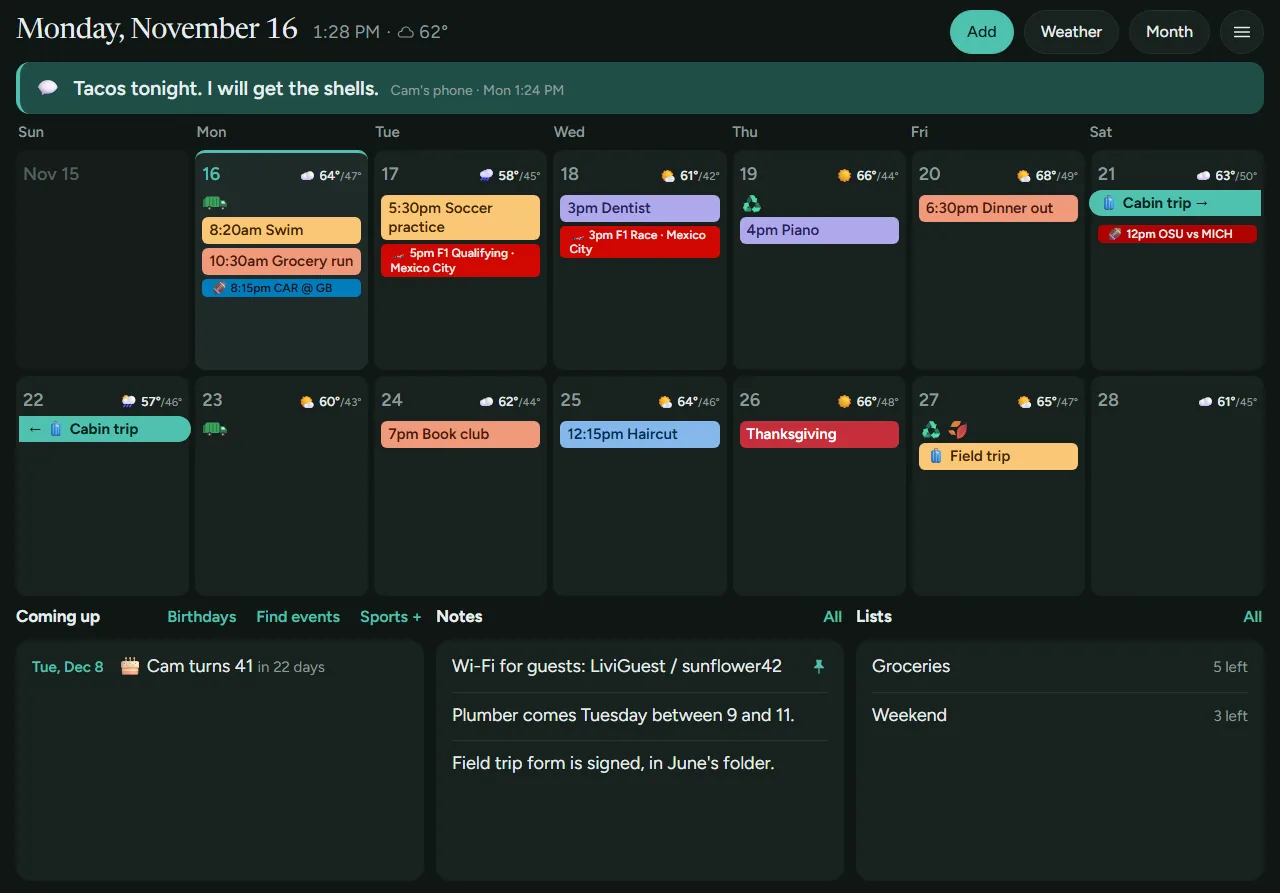
The dark theme for evenings. 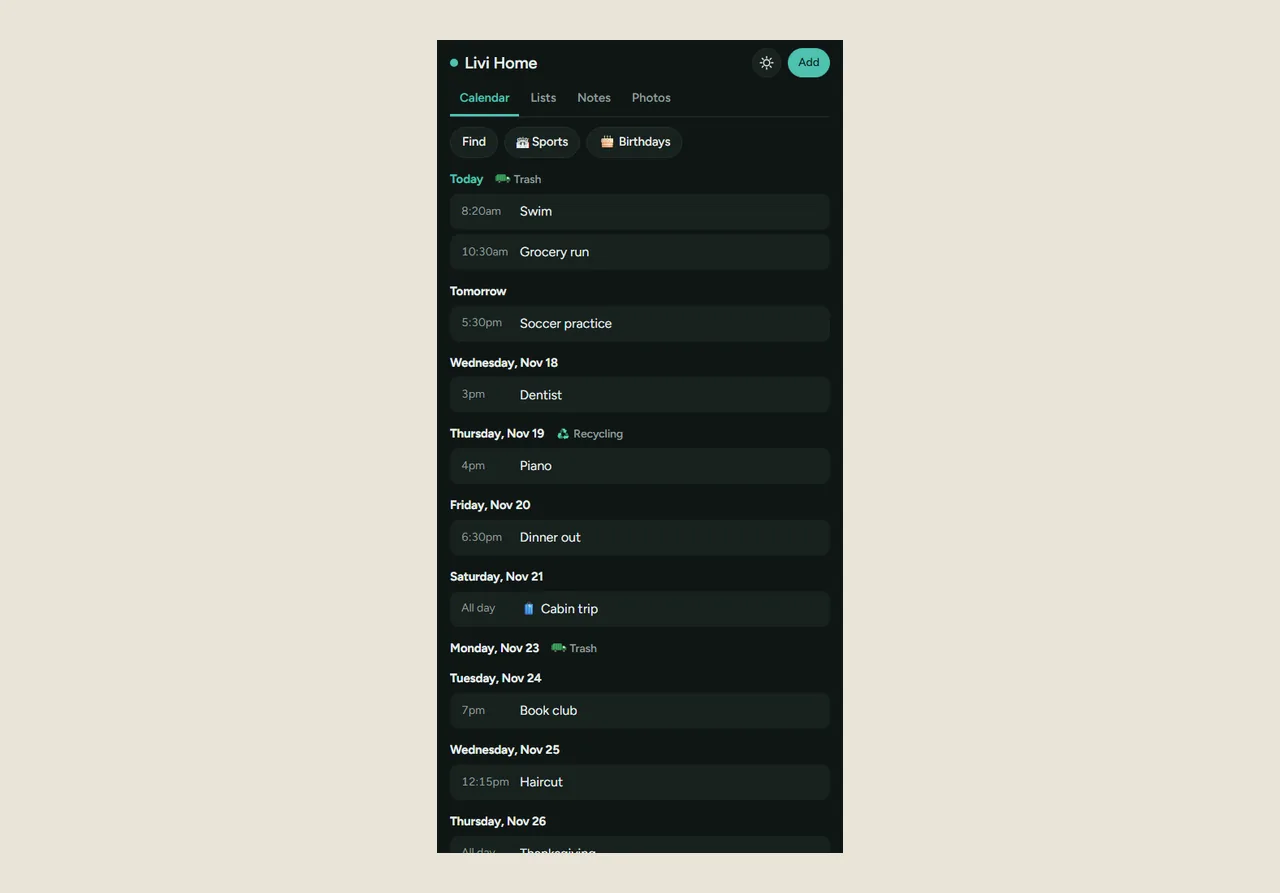
The phone view.
How a feature gets built
- An idea for a feature comes in.
- I check it against the written limits: cost, privacy, and the free tier's daily write budget.
- I write a plan file for the feature.
- An agent builds it on its own branch.
- The tests must pass, and I review screens taken with the made-up family.
- I deploy it myself and record the version to roll back to.
The app is one Cloudflare Worker with plain HTML, CSS and JavaScript, a database, and photo storage. It has no build step.
The value
My family uses it every day, and it costs nothing to run. It also shows that a non-engineer can own a real product when the agents doing the building work inside clear limits.
AI wrote the app, but no outside AI service ever sees the family's data. That line is a written requirement, and every feature is checked against it.
What I learned
- Product ownership. I keep one inventory of what exists, triage every request against the limits, and say no to features that break them.
- Delegation with rules. Every agent gets the same hand-off rules: never deploy, never run a migration, never open the secrets file, and stop to ask if a rule can't be followed.
- Release management. Database changes go first and are written so the old code still works. Every release has a recorded version to roll back to.
- Limits make better decisions. A $0 budget forces a clear answer on what each feature is worth.